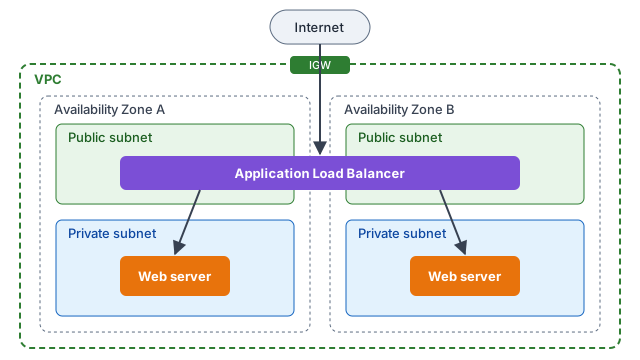
A retailer is launching a web application with the network design shown in the diagram. An internet-facing Application Load Balancer (ALB) in the public subnets forwards HTTPS requests to web servers in two Availability Zones. A security review of the first test deployment found that the launch template puts the web servers in the public subnets with public IPv4 addresses, and that their security group allows HTTPS from 0.0.0.0/0. The web servers must be reachable only through the ALB. Which TWO actions should a solutions architect take? (Choose two.)
Read a full description of the diagram
A VPC spans two Availability Zones. Each zone has a public subnet and a private subnet. An internet gateway is attached to the VPC. The Application Load Balancer has a node in each public subnet. Web servers on EC2 sit in each private subnet. Arrows show user traffic going from the internet, through the internet gateway, to the load balancer, and then to the web servers.
Choose two answers.
Show the answer and explanation
Answers: A, B
Explanation
Use two layers. Placing the web servers in private subnets without public IP addresses removes any direct path from the internet, and allowing inbound HTTPS only from the ALB's security group means that even traffic from inside the VPC must come through the load balancer. Network ACLs cannot reference security groups, an internal ALB would cut off customers, and AWS WAF does not protect traffic that bypasses the ALB.